
1532 CE
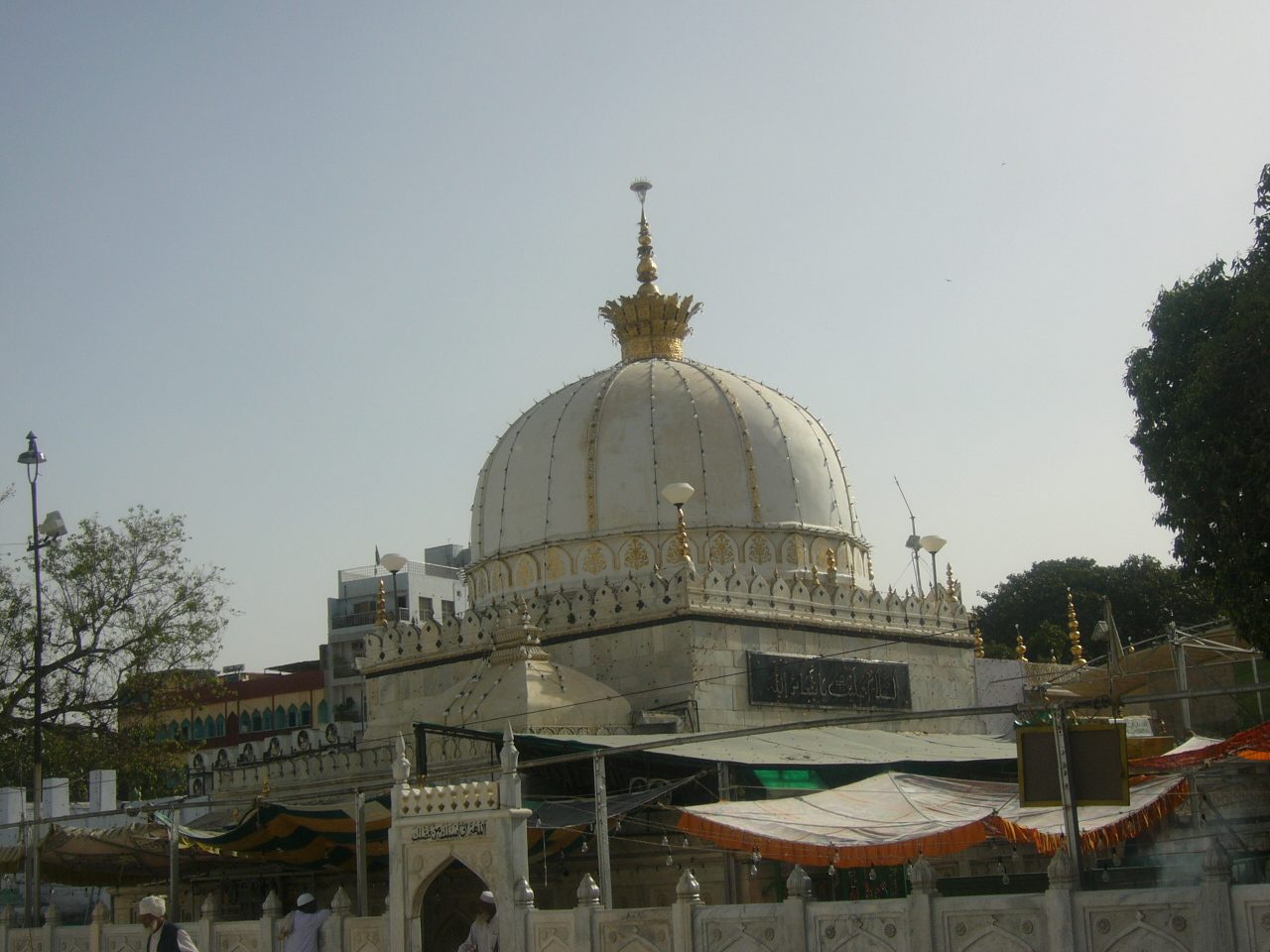
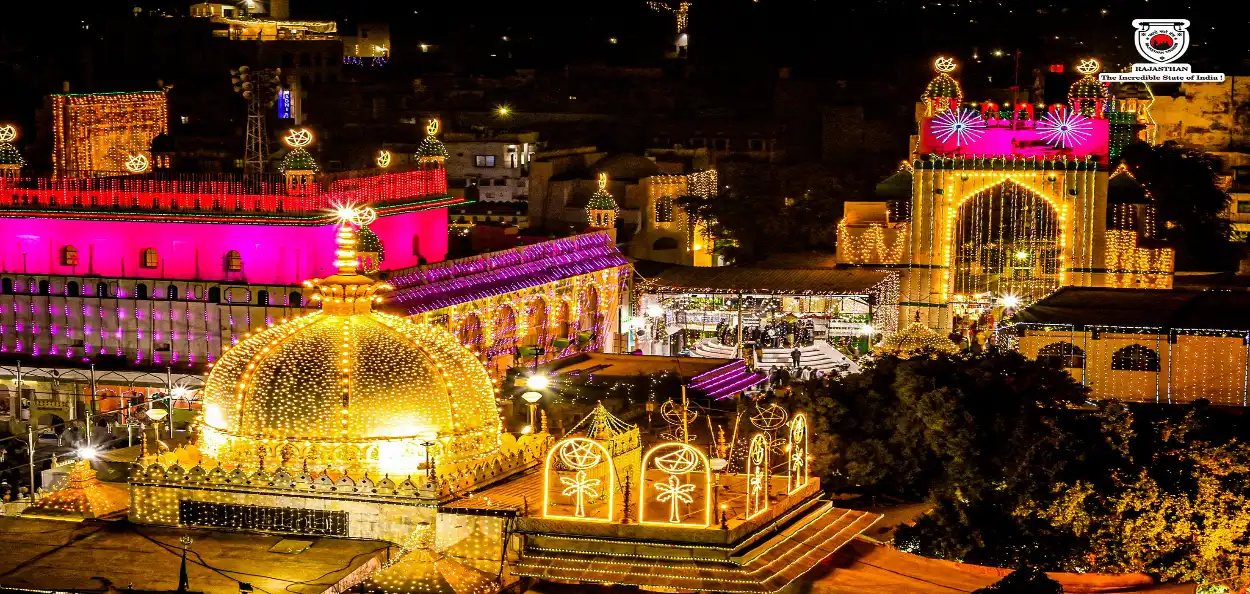
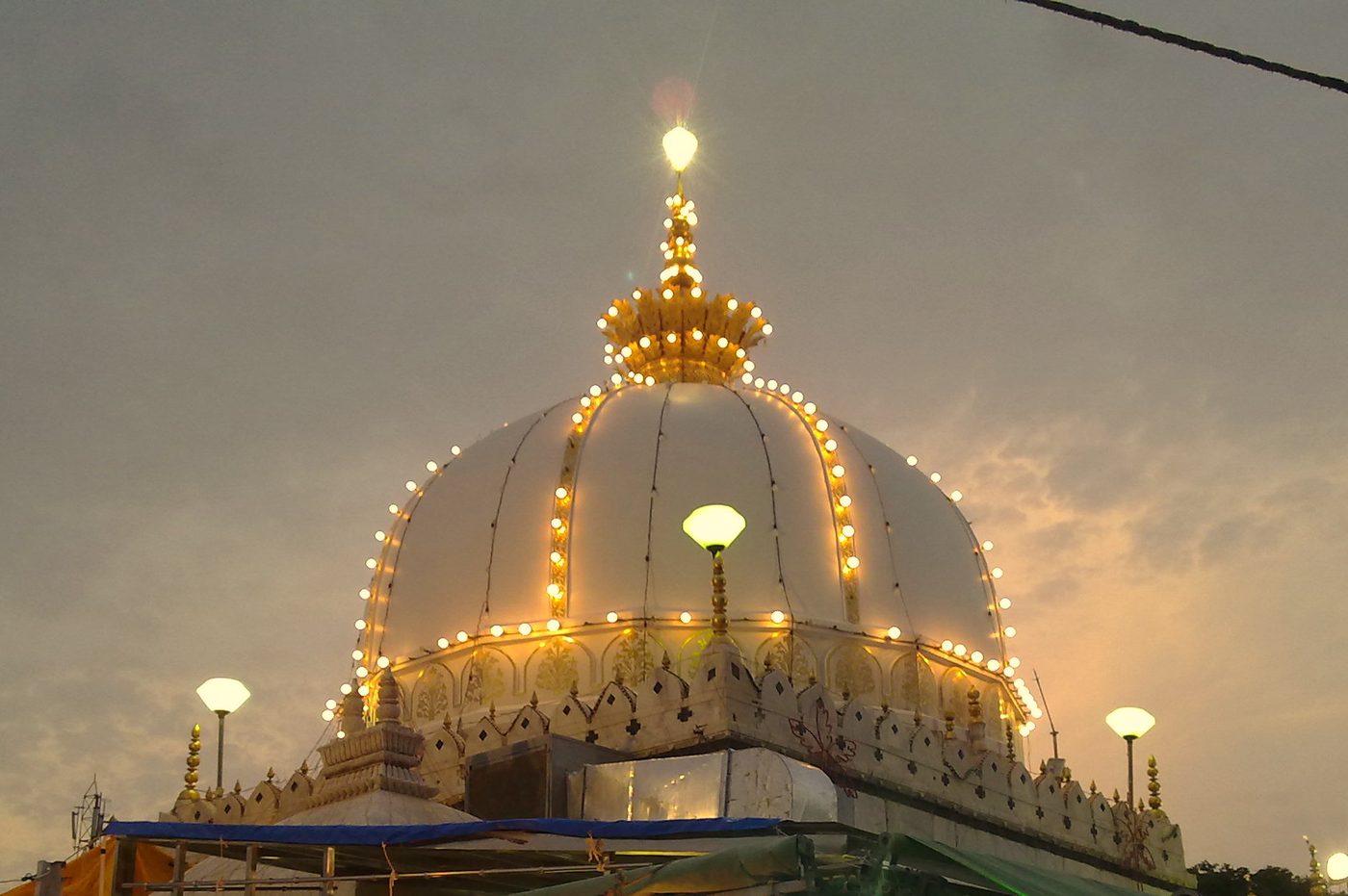
The marble dome
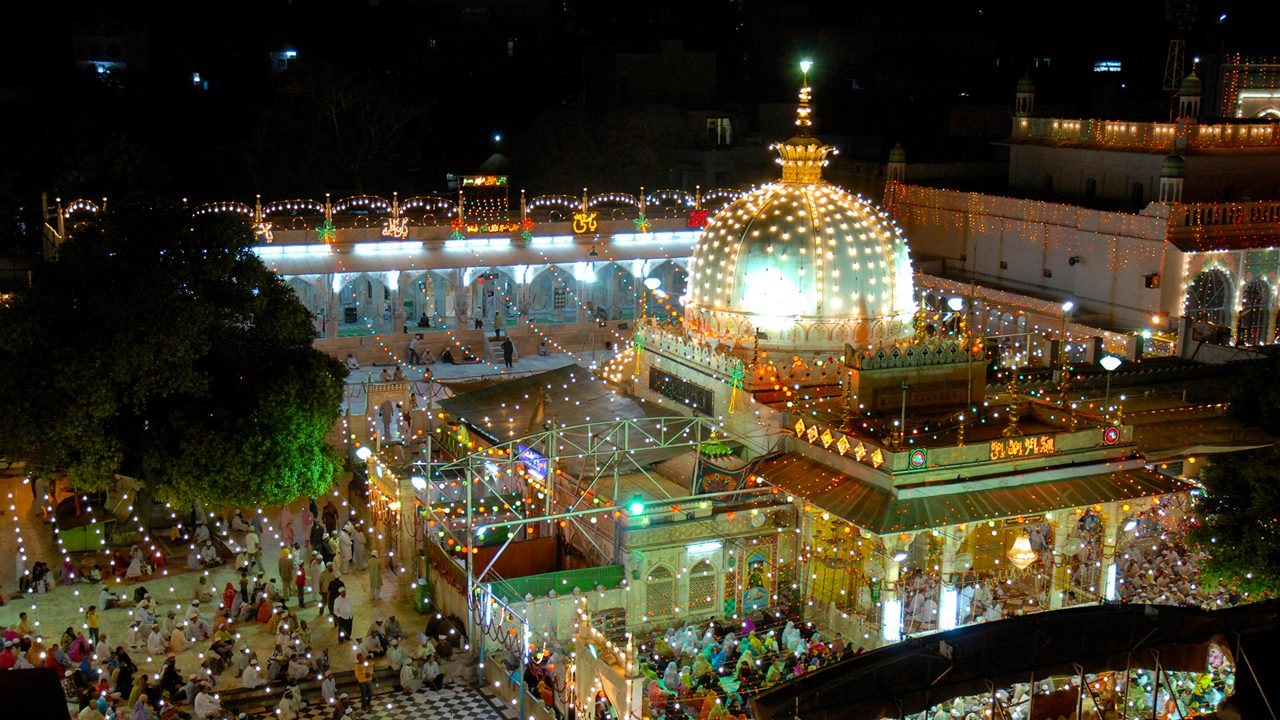
The white dome over the sanctum, its date inscribed in gold on the northern wall. The golden crown was gifted by the Nawab of Rampur.
خواجہ غریب نواز رحمۃ اللہ علیہ
Ziyarat, teachings and spiritual guidance at the Dargah of Hazrat Khwaja Moinuddin Hasan Chishty (R.A.), from Khanqah Chishty Hussain, Dargah Sharif, Ajmer.
The 815th Urs of Hazrat Khwaja Moinuddin Hasan Chishty (R.A.) is observed in the Islamic month of Rajab. Dates may shift by a day with the moon sighting.
6Dec
Sunday
The flag is raised on the Buland Darwaza, announcing the Urs.
11Dec
Friday
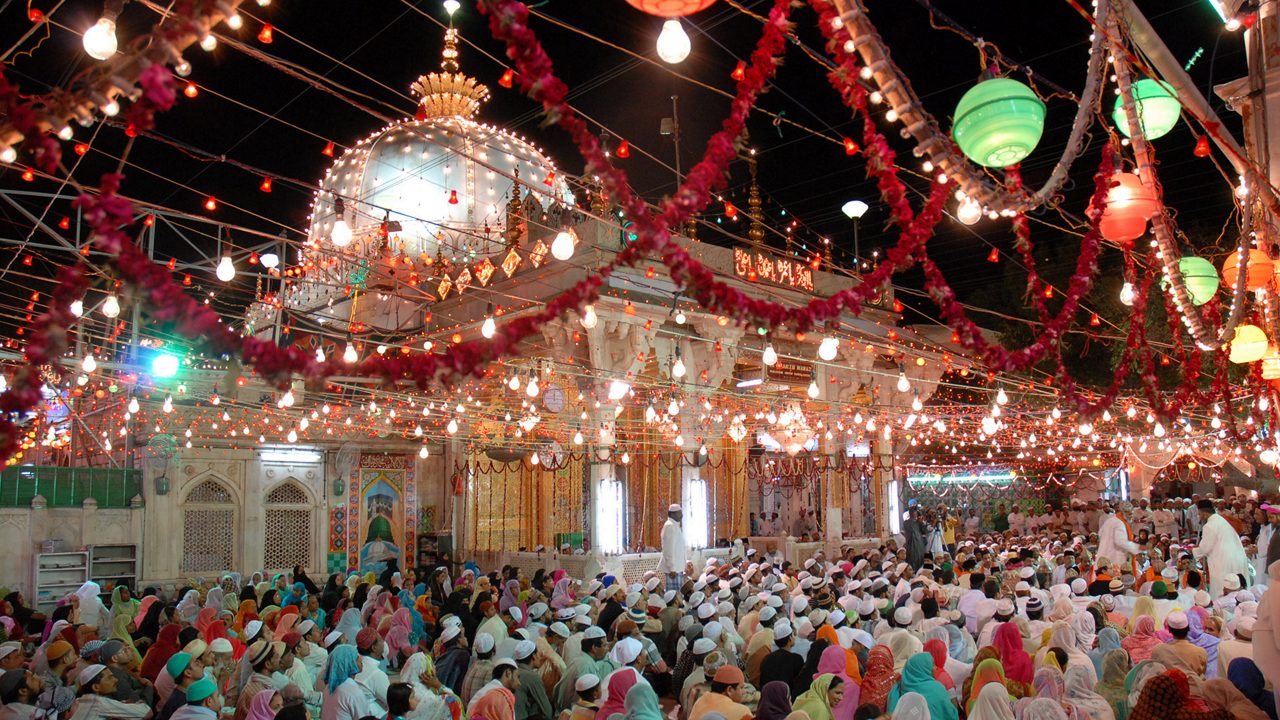
The Jannati Darwaza is opened. Nightly Mehfil-e-Sama begins.
16Dec
Wednesday
The annual Fateha (6 Rajab). The Jannati Darwaza is closed.
18Dec
Friday
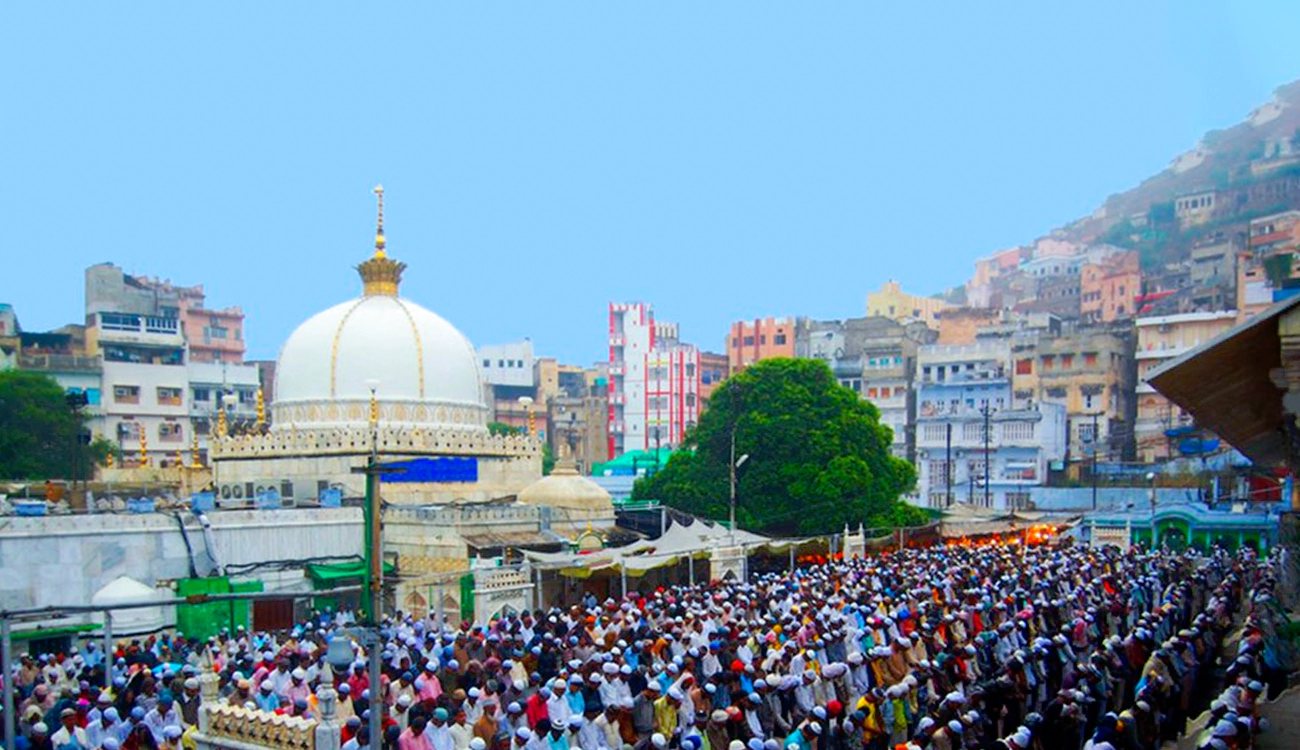
Friday congregational prayer at the Dargah.
19Dec
Saturday
The concluding Qul, closing the Urs.
Welcome to Ajmer Dargah Sharif
Embark on a spiritual journey to the heart of Sufism. We are dedicated to sharing the timeless teachings of Hazrat Khwaja Moinuddin Hasan Chishty (R.A.) and to fostering a space where seekers from all walks of life find solace and inspiration.
Allah says
أَلَا إِنَّ أَوْلِيَاءَ اللَّهِ لَا خَوْفٌ عَلَيْهِمْ وَلَا هُمْ يَحْزَنُونَ
“Behold! Verily, the friends of Allah shall have no fear, nor shall they grieve.”
The Prophet ﷺ stated
“Allah Almighty says: Whoever shows enmity to a friend of Mine, I declare war against him.”
Sultan-ul-Hind · Benefactor of the Poor
Revered as a Friend of Allah (Aulia-Allah), his paternal lineage traces to Hazrat Imam Hussain (A.S.) and his maternal lineage to Hazrat Imam Hassan (A.S.), making him a Sayyid, a direct descendant of the Prophet Muhammad ﷺ.
In Ajmer he practised Sulh-e-Kul, peace to all, to bring understanding between Muslims and non-Muslims, and introduced Qawwali (Sama) to carry his message to a people who loved music. For him religion was not ritual but the service of humanity; he struck at the roots of parochialism, casteism and religious exclusiveness.
“To relieve the misery of those in distress, to fulfil the needs of the helpless, and to feed the hungry.”
His answer when asked about the highest devotion to God
Ziyarat Info
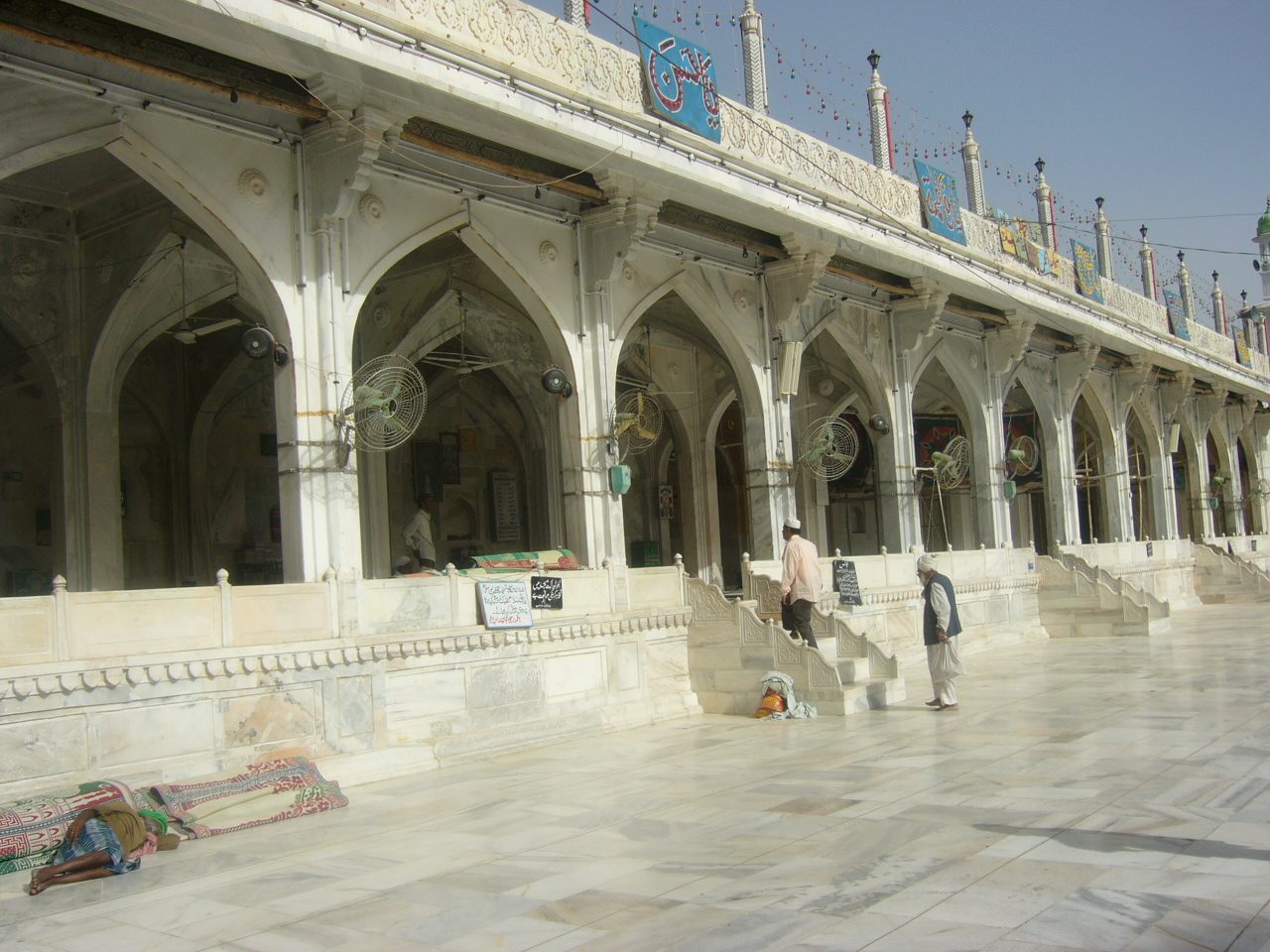
Built and adorned over eight centuries by sultans, Mughal emperors, Rajput rulers and the Nizam of Hyderabad, the complex welcomes people of every faith.
1532 CE
The white dome over the sanctum, its date inscribed in gold on the northern wall. The golden crown was gifted by the Nawab of Rampur.
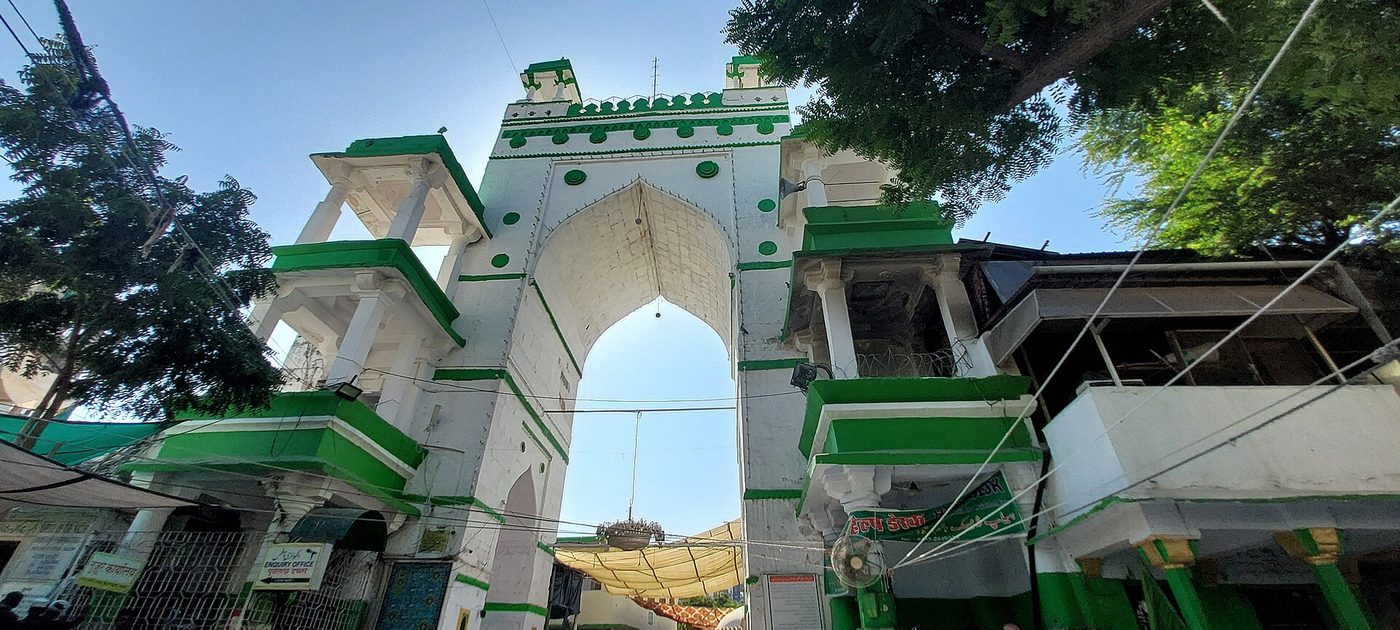
Nizam Gate · Buland Darwaza
Pilgrims enter through the Nizam Gate, gifted by the 7th Nizam of Hyderabad in 1911, then pass the Shahjahani Gate and the high Buland Darwaza, where the Urs flag is raised.
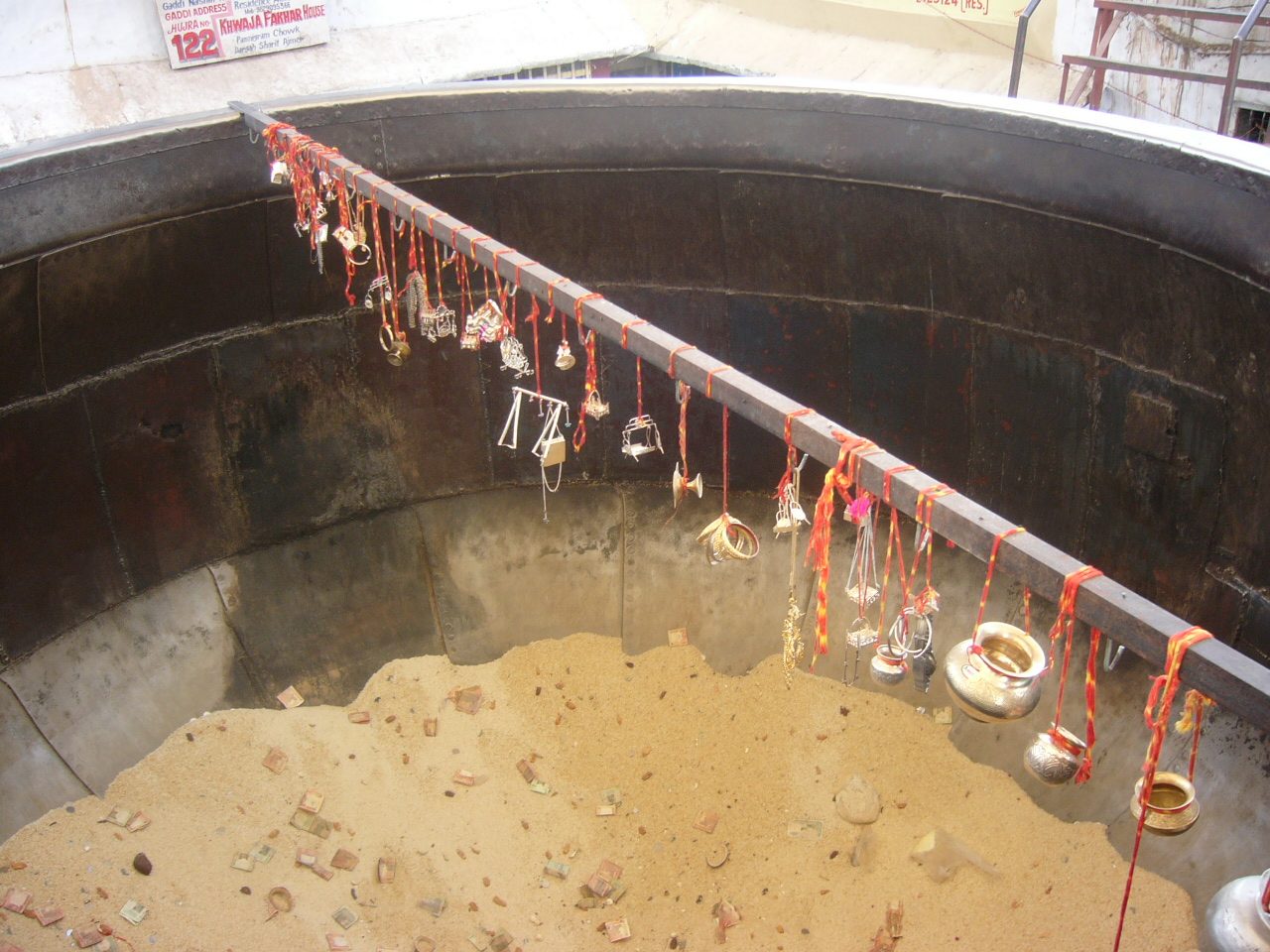
Langar · since 1568
Two giant cauldrons gifted by Emperor Akbar and Emperor Jahangir still cook degh ka khana, sweet rice with ghee, nuts and raisins, for pilgrims.
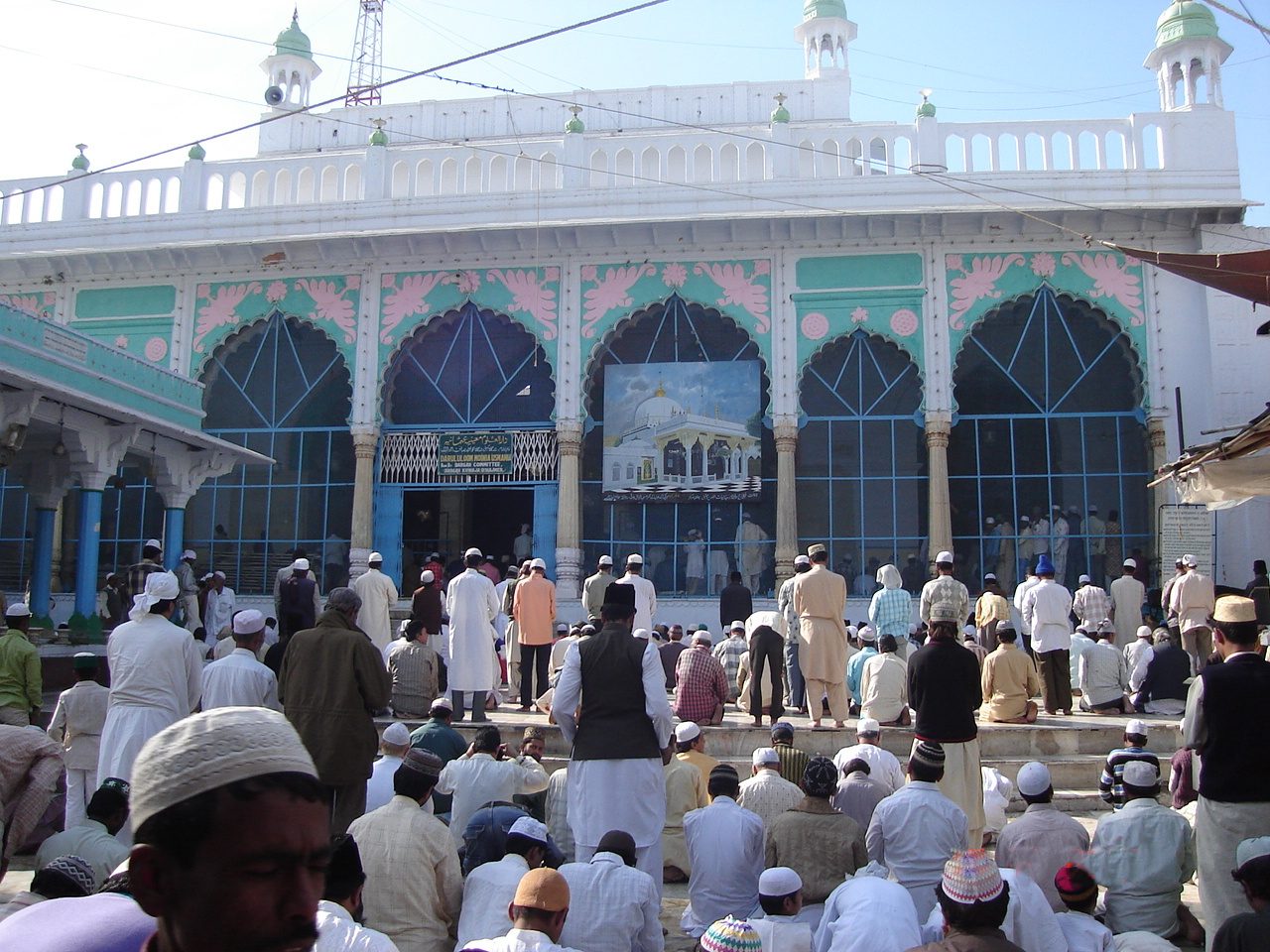
1637 CE
Shah Jahan's white marble Jami Masjid, west of the shrine, hosts the Friday prayer. The red sandstone Akbari Masjid stands nearby.
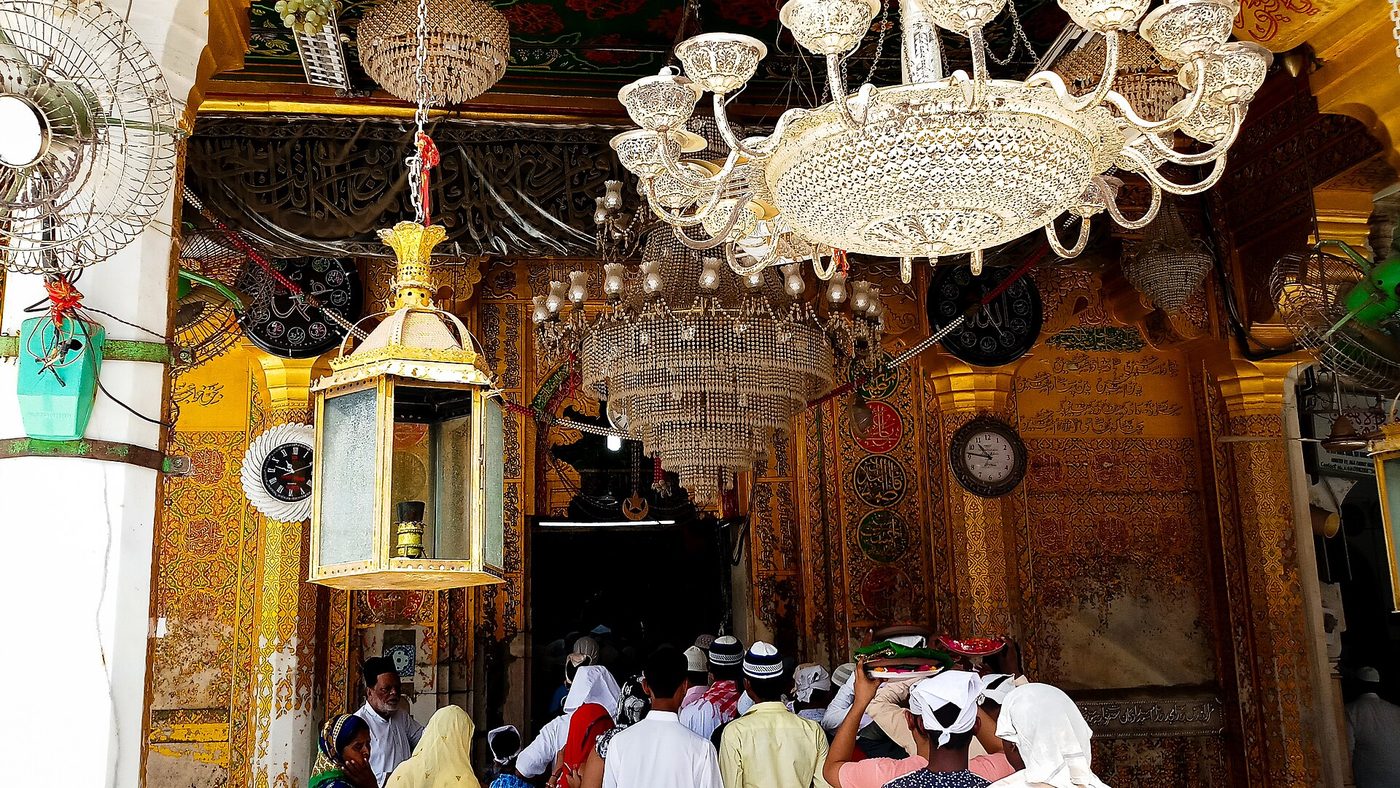
1888 CE
The assembly hall for qawwals, with a patterned ceiling and chandeliers. It opens mainly during the Urs for the nightly Mehfil-e-Sama.
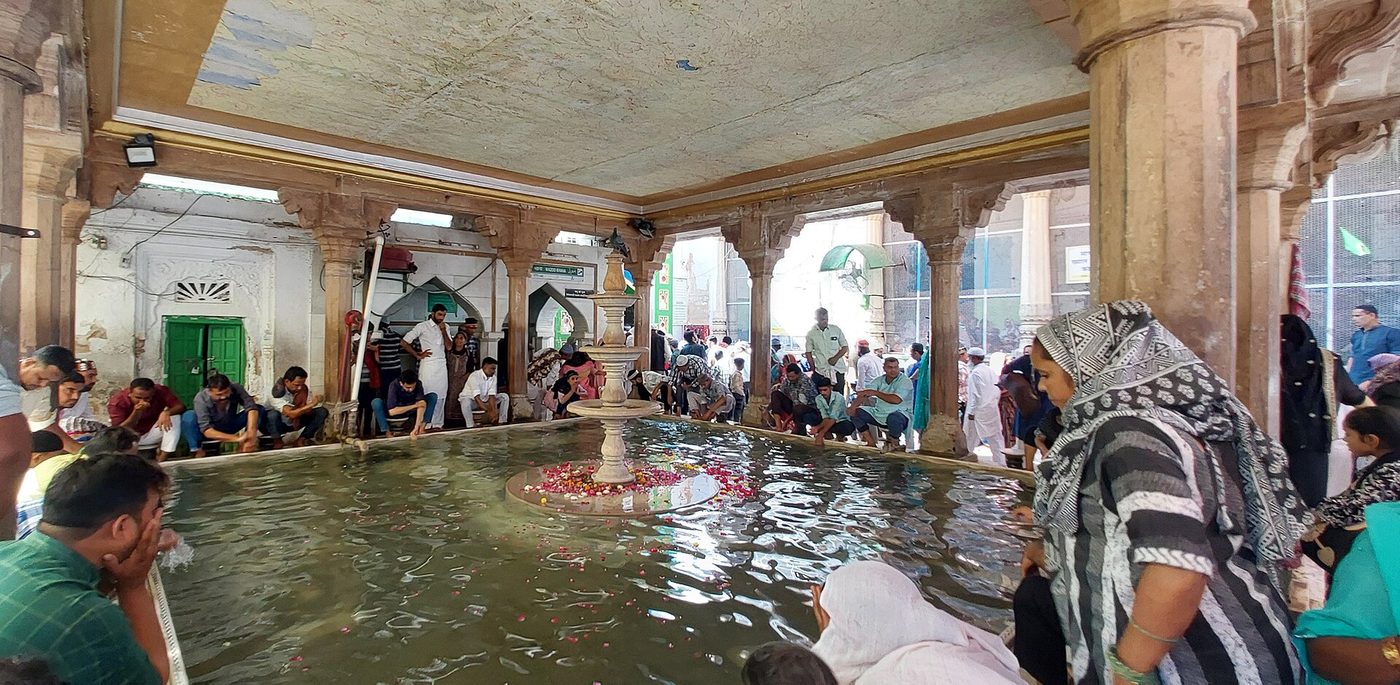
Jhalra
The Jhalra, a natural water tank, has served pilgrims for centuries. Shah Jahan and Queen Mary added further tanks to the complex.
Daily rituals
Chadar & Niyaz
Pilgrims present a chadar, an embroidered sheet laid over the blessed grave, together with rose petals and niyaz (sweets or food offered and shared). Tonnes of roses arrive at the shrine every day.
Peer Sahib can arrange a chadar, flowers and a dua on your behalf if you cannot travel, or guide you through the ziyarat when you arrive.
Teachings
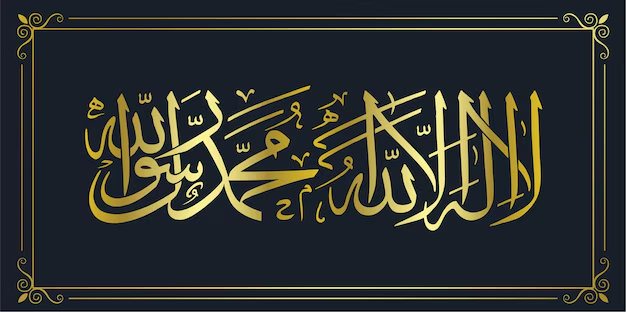
اللہ کے آخری رسول
The final messenger of Allah, whose coming was foretold by earlier prophets. Traces of these prophecies remain in the Torah, the Psalms and the Gospels.
Torah · Deuteronomy 18:17–19
“I will raise up for them a prophet like you from among their brothers; I will put My words in his mouth.”
Understood to refer to the Prophet ﷺ, descended from Ishmael, who brought divine law as Moses did.
Torah · Deuteronomy 33:2
“The Lord came from Sinai and dawned over them from Seir; He shone forth from Mount Paran.”
Sinai for Moses, Seir for Jesus, Paran for the land around Mecca where the final revelation came.
Psalms
“O God, send to us after the interregnum one who will establish Your way.”
A plea understood as answered by the Prophet ﷺ, who brought final and complete guidance.
Gospel · Matthew 21:42–43
“The stone the builders rejected has become the cornerstone… given to a people who will produce its fruit.”
Read as a prophet who would establish God's kingdom, and a community bearing its fruit.
Gospel · John 16:7, 16:13
“When he, the Spirit of truth, comes, he will guide you into all the truth. He will not speak on his own.”
Some scholars interpret the Paraclete as the Prophet ﷺ, who spoke only what was revealed to him.
In summary
These references point to the continuity of the divine message and affirm the Prophet ﷺ as the final messenger, bringing guidance and truth to all humanity.
Awliya’ Allah
The Awliya’ are devoted servants who have attained spiritual enlightenment in their earthly lives. They remember Allah constantly and purify themselves through effort, self-discipline, abstinence and prayer, drawing near Him through worship and service to humanity.
The Awliya’ are not worshipped. They are respected as beloved servants of Allah, below the prophets in rank yet recognised as their true successors. Learning from their lives strengthens faith without compromising Tawheed.
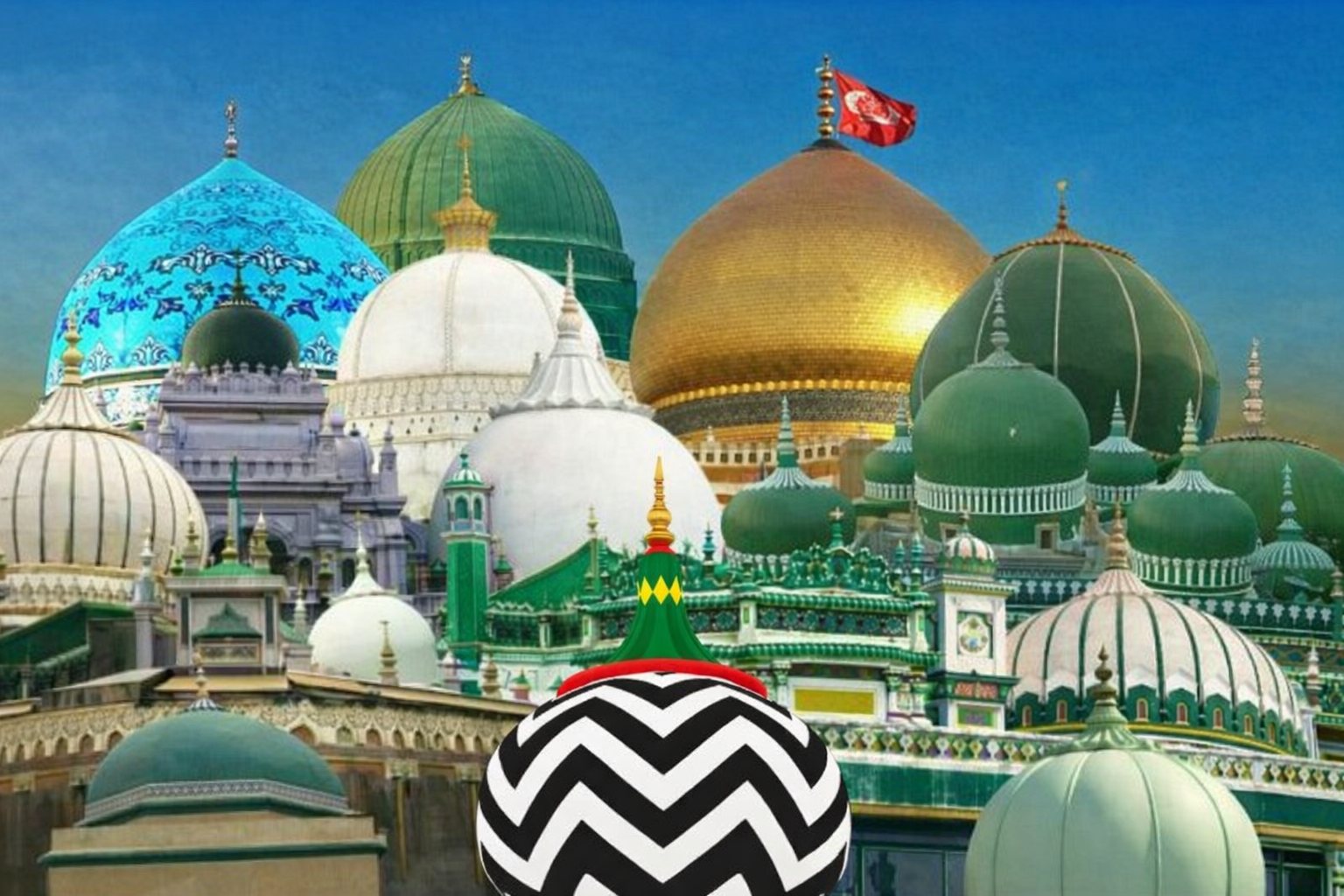
All things come from Allah, and He has established means through which His blessings reach us. Visiting the shrines of the Awliya’, touching the chaddar, or asking their intercession for a murad is love and respect, not worship, and is not shirk or bid‘ah.
Pilgrims kiss the ghilaf of the Kaaba and the Hajar al-Aswad; believers kiss the Quran out of reverence for its message. In each case the act is reverence, not worship.
It is like asking friends, relatives or officials for help in worldly matters, while knowing that life and death rest with Allah alone. The intercession of the saints is a means by which believers hope to gain Allah's favour.
“Its true guardians are none but the righteous” (Al-Anfal 8:34). “He has succeeded who purifies it” (Ash-Shams 91:9). “Except one who comes to Allah with a sound heart” (Ash-Shu‘ara 26:89).
The Prophet ﷺ said Allah supports this nation through the supplications and sincerity of its weak (Sunan an-Nasa’i), and spoke of forty Abdal through whom the earth is preserved and help is given.
By Allah's command of Kun Fayakun, “Be, and it is”, their supplications are granted. Countless accounts tell of people cured without medicine through their prayers. Centuries later they still draw those seeking relief from worldly and spiritual difficulty.
Mystic Path
Tasawwuf is the spiritual path in Islam that focuses on the inner journey toward the Truth and closeness to God. It may include philosophical reflection, but its essence is lived discipline and practice.
Healing Touch
Chief Moallim Gaddinashin (Peer Sahib) Syed Imran Chishty provides spiritual healing under the guidance of Hazrat Khwaja Gharib Nawaz (R.A.), free of charge, to people anywhere in the world, regardless of race, religion or gender.
Spiritual healing is offered as support alongside medical care, never in place of it. Please continue any treatment prescribed by your doctor.
The Taweez
Written by an experienced Peer Sahib or Shaykh and prayed upon before use, sometimes in numerical or symbolic form in saffron ink.
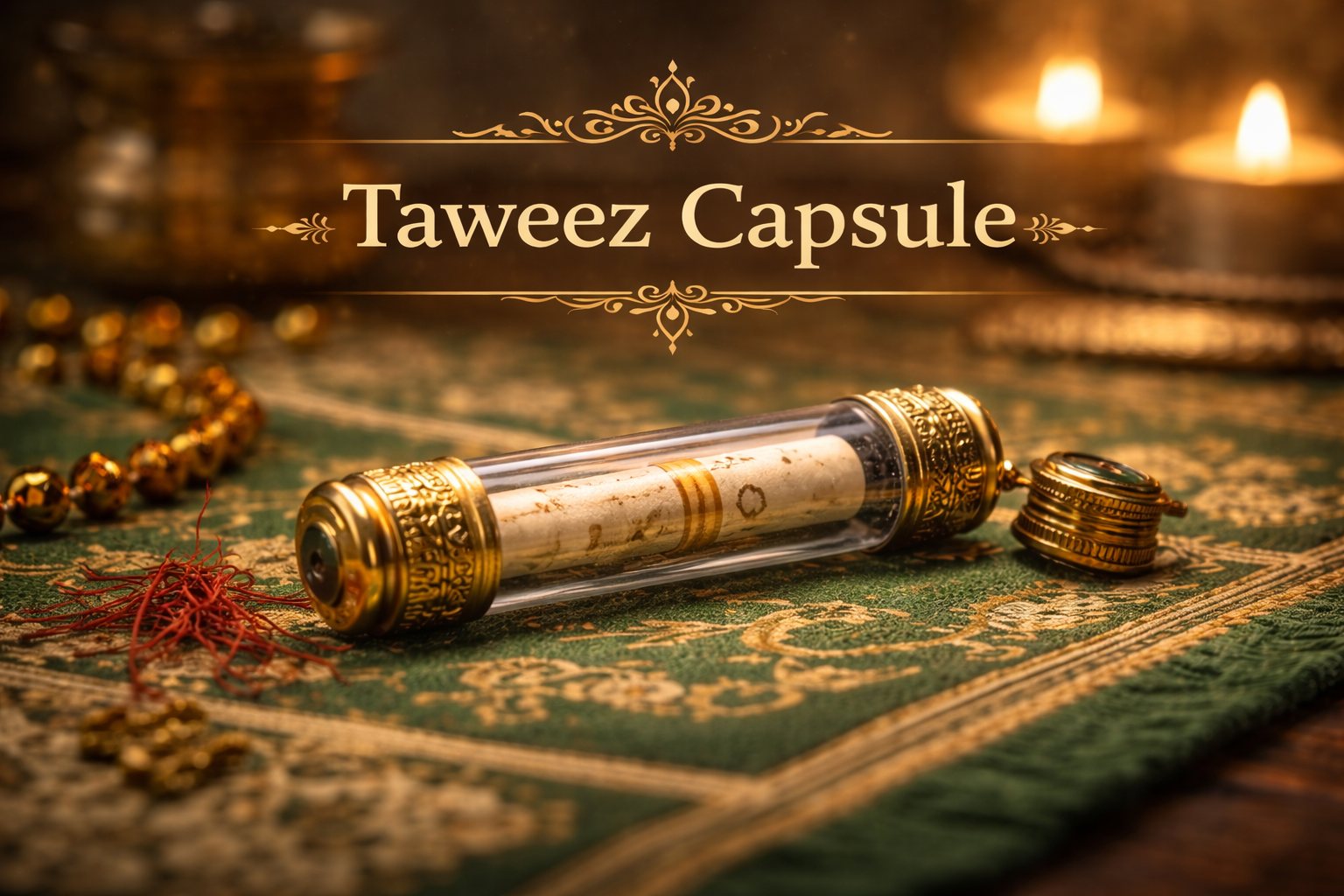
The written prayer is sealed inside a small protective cylindrical capsule.
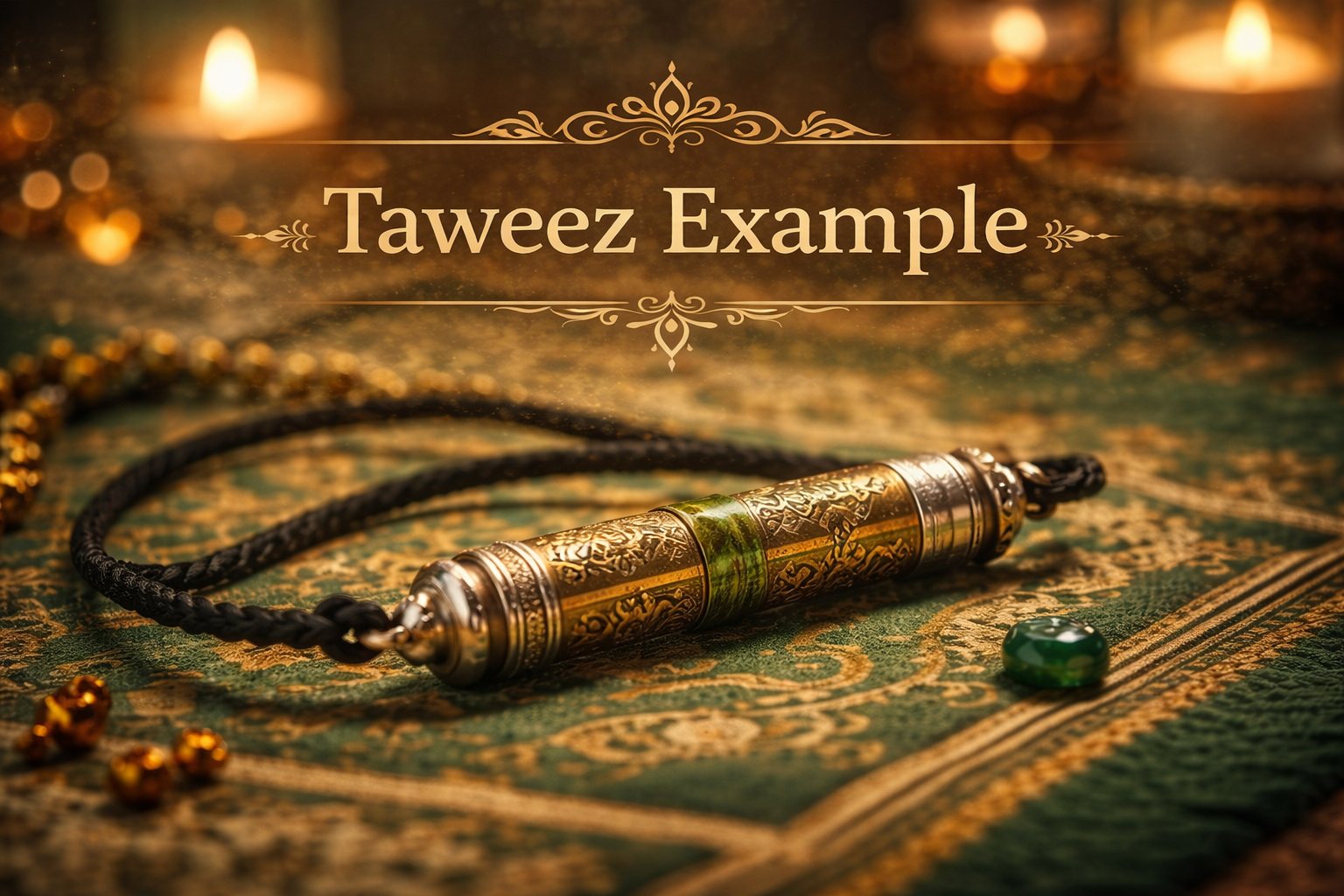
Worn around the neck for a specific need, or for general blessing and protection.
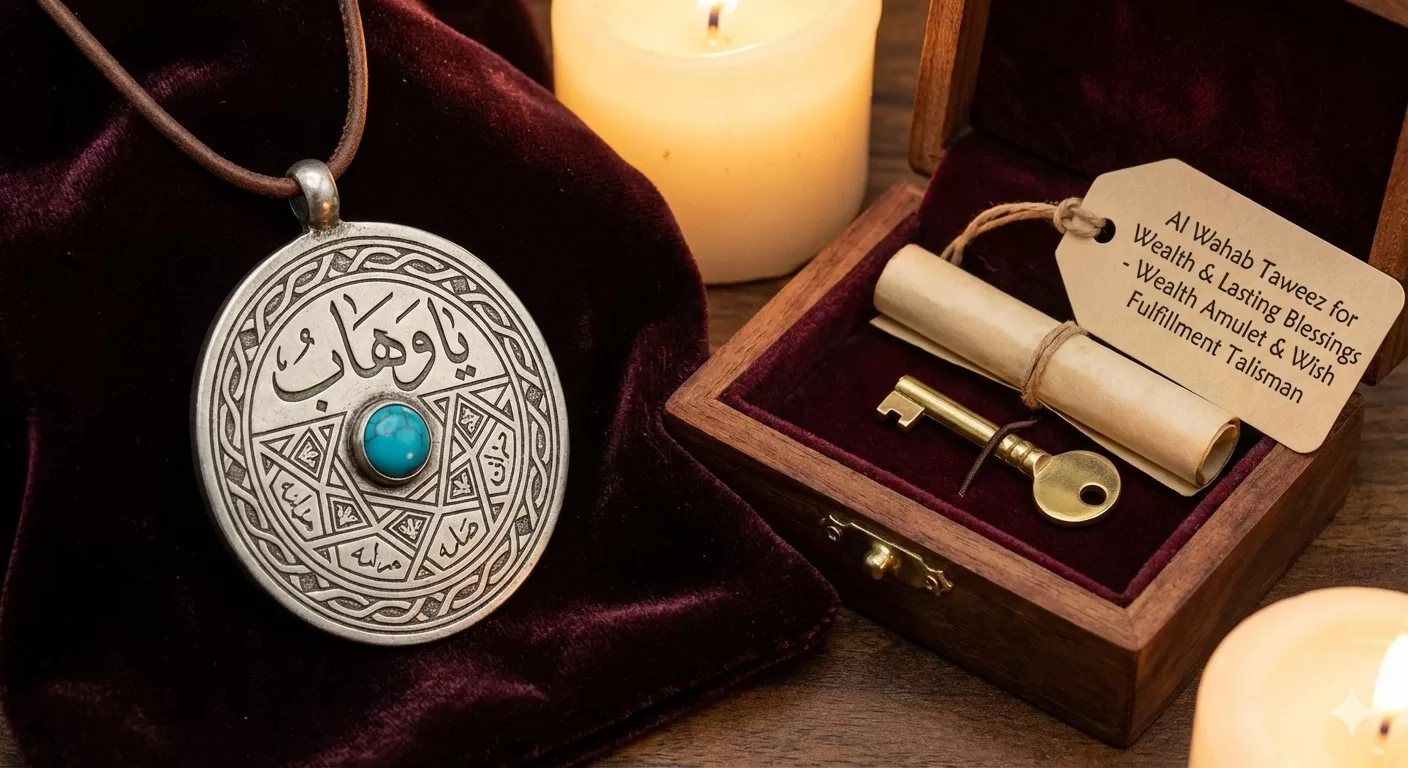
The prayer may be dissolved in drinking water, so the blessed water brings spiritual relief.
There is no harm. It is considered beneficial for anyone.
Used correctly and with sincere intention, it serves only positive spiritual purposes.
Seek recommendations from people you trust and from respected spiritual communities.
Yes. The Sufi tradition is built on compassion and service to all.
Plan your visit
Practical guidance for your ziyarat. Timings shift with the season and during the Urs, so check with us before you travel.
Per Incredible India (Govt. of India). Hours change during the Urs.
The last stretch is through narrow lanes; go on foot or by auto-rickshaw.
October to March is the most comfortable, with cool days. April to June is very hot, with highs above 40 °C. For the Urs, book well ahead and expect very large crowds.
Guest houses and hotels line Dargah Bazaar and the lanes around the shrine, with larger hotels near the station and Ana Sagar. Message us and we will suggest a stay close to the Dargah.
Around Ajmer
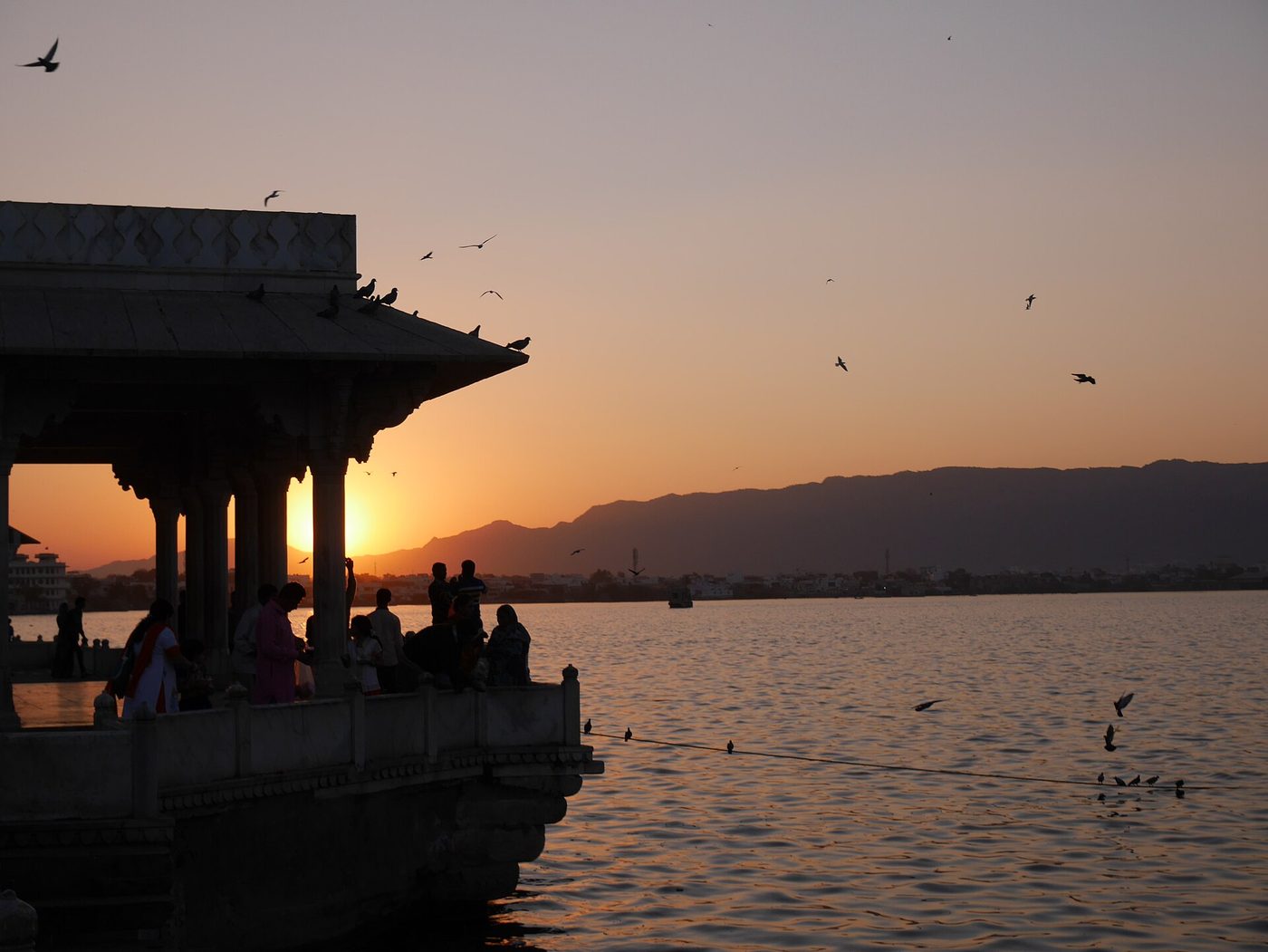
about 3 km
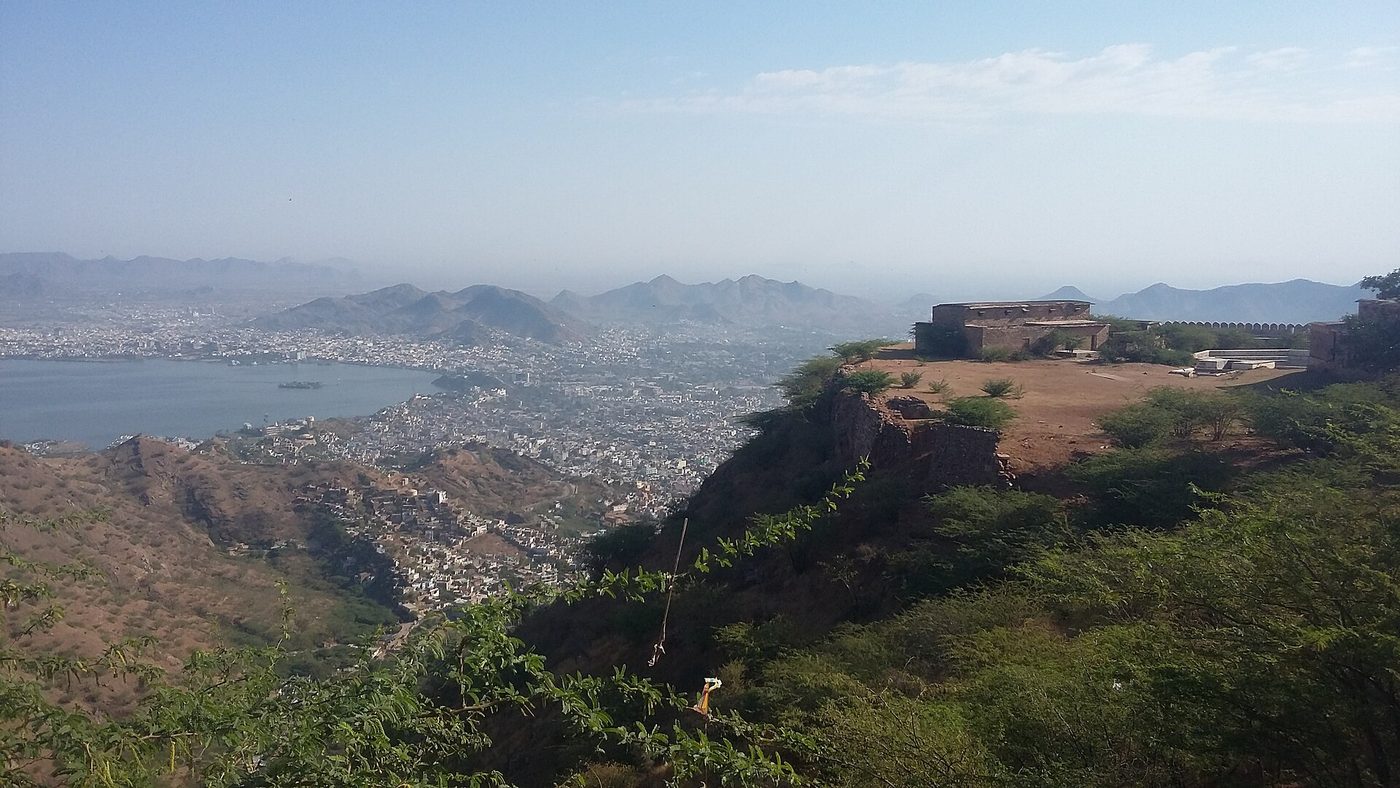
Above the Dargah
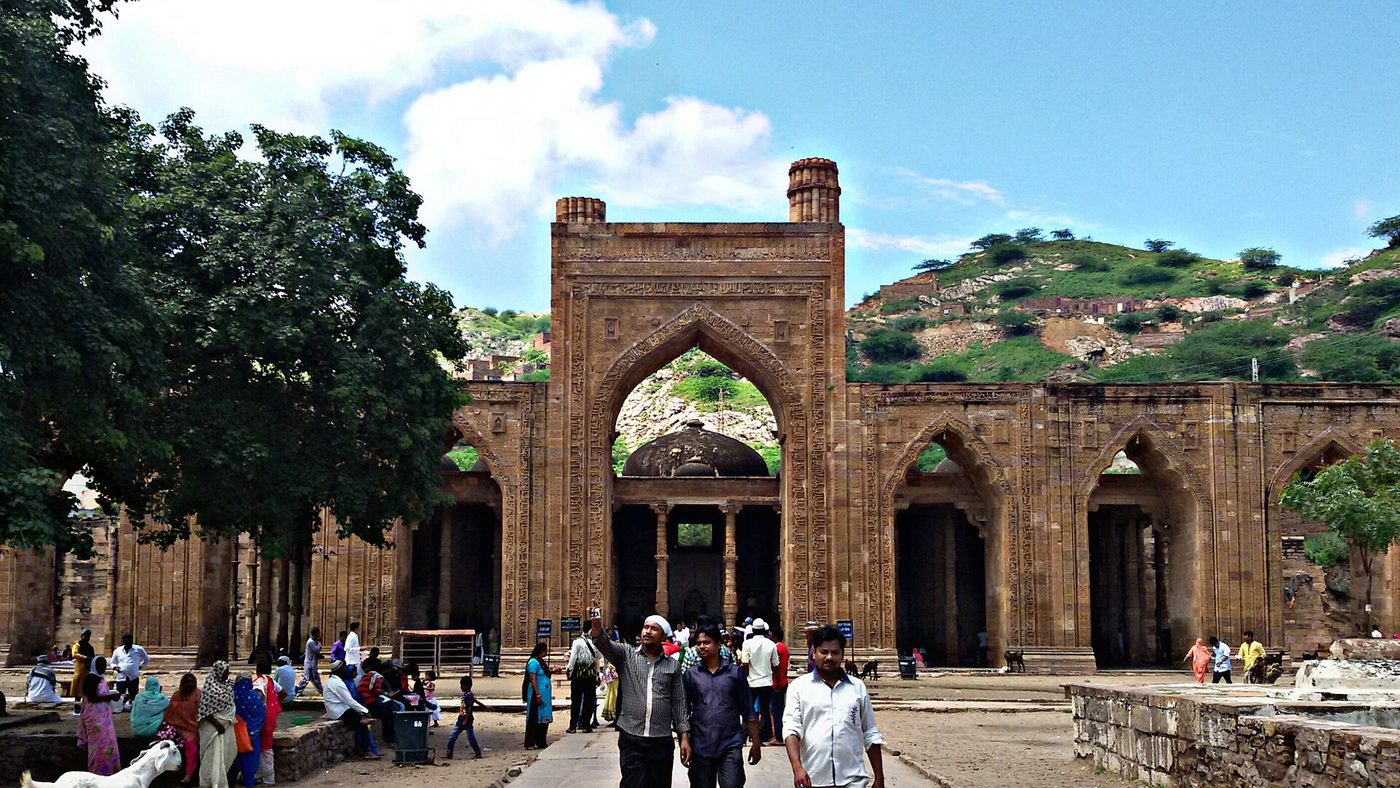
Next to the Dargah
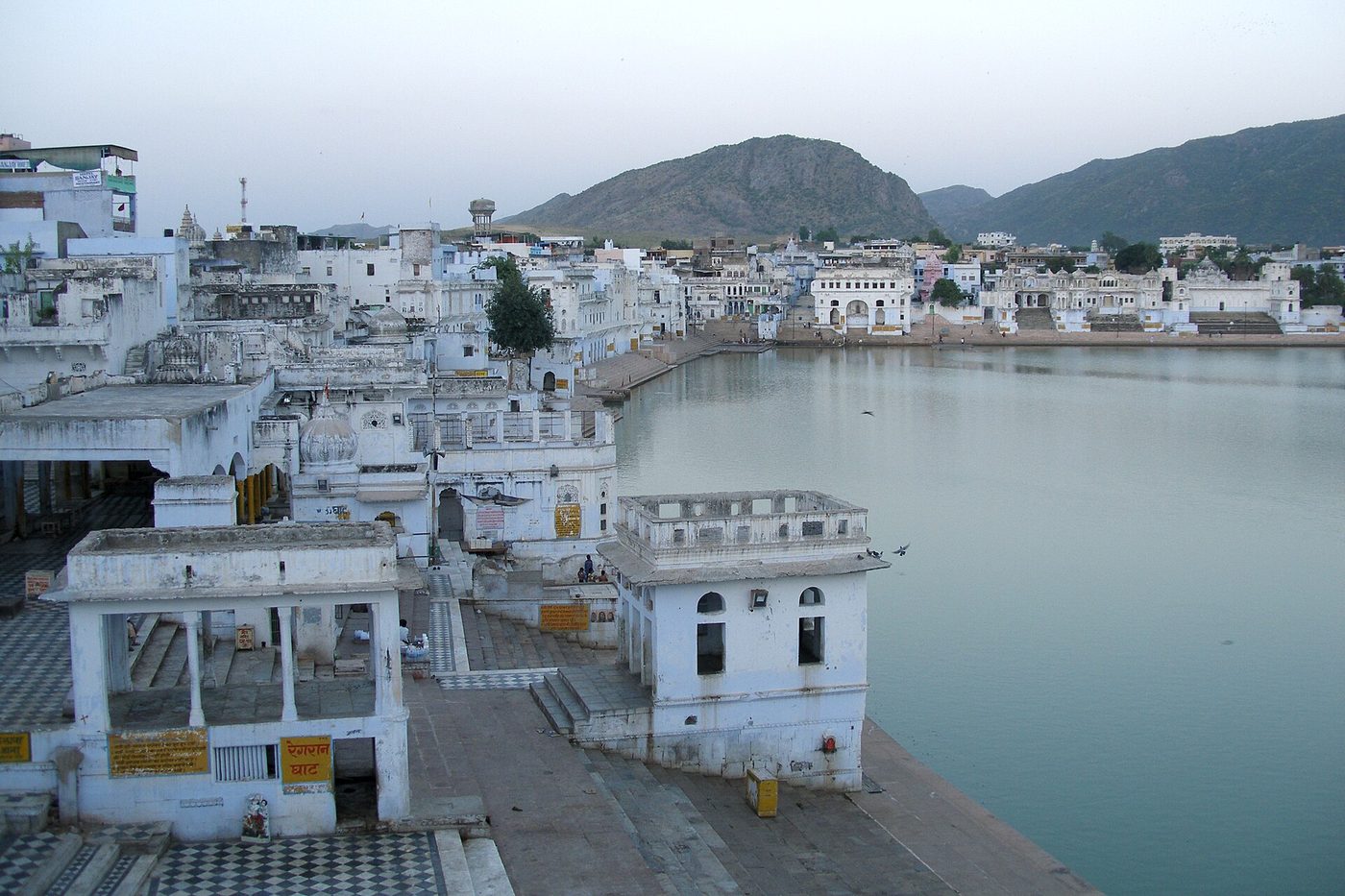
about 14 km
Gallery
Questions
Anything else? Message Peer Sahib on WhatsApp and the khanqah will help you.
Yes. Gharib Nawaz taught Sulh-e-Kul, peace to all, and the Dargah has always welcomed people of every religion.
No. Entry to the Dargah is free. Offerings of chadar, flowers and niyaz are voluntary.
In 2026 the Urs programme runs from the flag ceremony on 6 December to the Bara Qul on 19 December. The Urs begins and the Jannati Darwaza opens on 11 December, and Chhati Sharif falls on 16 December. The dates move each year with the lunar calendar.
Yes. Contact Peer Sahib with your name and intention and he will arrange it at the Dargah.
Yes. Peer Sahib offers healing and taweez free of charge to anyone, anywhere in the world.
Yes. Women visit the shrine and may attend the Mehfil-e-Sama during the Urs. Please cover your head and dress modestly.
Contact
“Service to humanity is the highest form of worship.”
Location
The khanqah is inside the Dargah area, a short walk from the Nizam Gate. Ajmer Junction railway station is about 2 km away.